
In case you aren’t aware of this, every time you visit a site that has Google Adsense on it, and every time you visit a site that uses the DoubleClick ad management system, you have the potential for being tracked via a cookie that is injected to your computer. The cookie is known as the DoubleClick DART cookie, and, in fact, there is a very good chance that you are being tracked by one of these cookies. This is so that Google and DoubleClick can serve up ads to you that are more tailored for you, based on, among other things, your web-browsing history.
Put another way, this cookie identies your computer with a unique value, and whenever the computer with that value (i.e. your computer) hits a site with the DoubleClick DART cookie, it’s tracked. That way when all of the data collected by your cookie is analyzed as a whole, a picture of your browsing habits emerges. Do you spend a lot of time on Amazon and B&N.com? Perhaps you’ll start seeing more ads for books. Do you spend most of your time on home improvement sites? You may see more ads for home-building and DIY companies.
Known as the DoubleClick DART cookie, Google explains that the DoubleClick DART cookie “is used by Google in the ads served on the websites of its partners, such as websites displaying AdSense ads or participating in Google certified ad networks. When users visit a partner’s website and either view or click on an ad, a cookie may be dropped on that end user’s browser. The data gathered from these cookies will be used to help better serve and manage ads on the publisher’s site(s) and across the web.”
Or, as they explain on their own privacy policy page, “Google uses cookies to improve your online experience, including the display of more relevant ads.”
DoubleClick explains the DoubleClick DART cookie thusly: “The DART cookie is a persistent cookie and consists of the name of the domain that set the cookie (“ad.doubleclick.net”), the lifetime of the cookie, and a “value.” DoubleClick’s DART technology generates a unique series of characters for the “value” portion of the cookie,” adding that “If you have a DoubleClick cookie in your Cookies folder, it is most likely a DART cookie. The DoubleClick DART cookie helps marketers learn how well their Internet advertising campaigns or paid search listings perform.”
Any way you slice it, or explain it, they are using the DoubleClick DART cookie to track you, and your surfing habits.
The Internet Patrol is completely free, and reader-supported. Your tips via CashApp, Venmo, or Paypal are appreciated! Receipts will come from ISIPP.
CashApp us

Venmo us

Paypal us

As a result, sites which publish Adsense or use the DoubleClick system are being advised by Google to include the following language in their privacy policies (and, as we ourselves do use Adsense to help cover the cost of providing The Internet Patrol to you for free, we now present you with this very language):
Google, as a third party vendor, uses cookies to serve ads on this site.
Google’s use of the DART cookie enables it and its partners to serve ads to our users based on their visit to our site and/or other sites on the Internet.
You may opt out of the use of the DART cookie by visiting the Google ad and content network privacy policy here.
Once you click that above link, look for this big opt-out button on the upper right-hand side of the page:
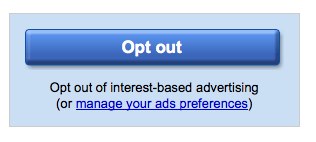
(Actually you can just click the above button, as we linked it to the actual opt-out page.)
Of course, Google doesn’t necessarily suggest that you put the part about opting out in bold type, or provide a clickable opt-out image, but we thought that making it easy for our readers to opt-out of the cookie tracking was a nice touch.
The Internet Patrol is completely free, and reader-supported. Your tips via CashApp, Venmo, or Paypal are appreciated! Receipts will come from ISIPP.
CashApp us
Venmo us
Paypal us




Or simply use noscript with Firefox to stop the gazillion cookies in the first place.